Pokémon Red and Blue / GAME HISTORY
Why Can a 100%-Accurate Move Miss in Pokémon Red and Blue?
At the normal maximum threshold, one random value still fails the original accuracy check.
Short answer
The community disassembly shows a 1-in-256 miss chance on Pokémon Red and Blue’s normal maximum-accuracy path. A value of 255 still fails its comparison. Swift and active X Accuracy bypass that test, so the rule does not cover every move.
Scope: Original Game Boy Red and Blue, using the preserved MoveHitTest and CalcHitChance routines.
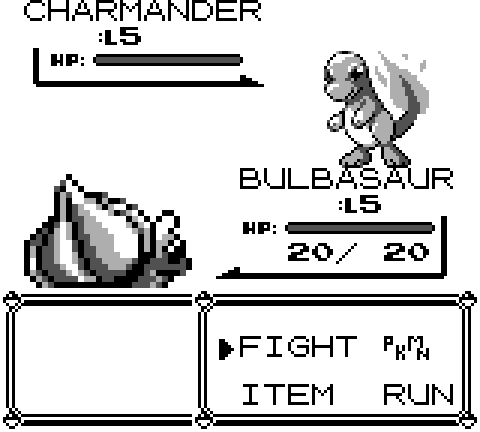
A finishing hit can still miss
Even with no accuracy reduction or evasion increase, an attack using the normal maximum threshold can fail. That can leave the opponent standing when the player expected the next hit to end the battle.
The relevant check has a maximum threshold of 255 and a random byte that can also be 255. The program rejects a result greater than or equal to the threshold. There are 255 passing values out of 256, leaving one failing value: about 0.39% at that maximum.
The exceptions leave before the comparison
The same MoveHitTest routine returns early for Swift’s move effect and for an active X Accuracy state. Those paths do not make the normal comparison. Saying that literally every move must face the one-in-256 failure would miss the exceptions visible in the code.
A miss is not automatically this bug
Accuracy and evasion changes can lower the chance further. Other battle conditions, including the checks around Fly and Dig, also affect whether an attack connects. The one-in-256 case explains the ordinary maximum threshold; it does not diagnose every failed move. The source is a community reconstruction of Red and Blue, not a claim that all later games use the same comparison.
Join the conversation
Have a question, correction or a different take? Share it below. Comments appear immediately after submission.
Reader comments
Loading comments…