Street Fighter II / GAME HISTORY
Were Street Fighter II Combos an Accident?
The useful part of the story happens before the arcade game ships, not after players discover it.
Short answer
Partly. Designer Akira Nishitani described an unplanned move-linking effect found during development. The team noticed it and kept it. Calling the whole combo system an untouched mistake misses the decision made before release. [1]
Scope: Original Street Fighter II development; a translated 1991 designer interview, not a combo guide for every revision.
What did the developers notice?
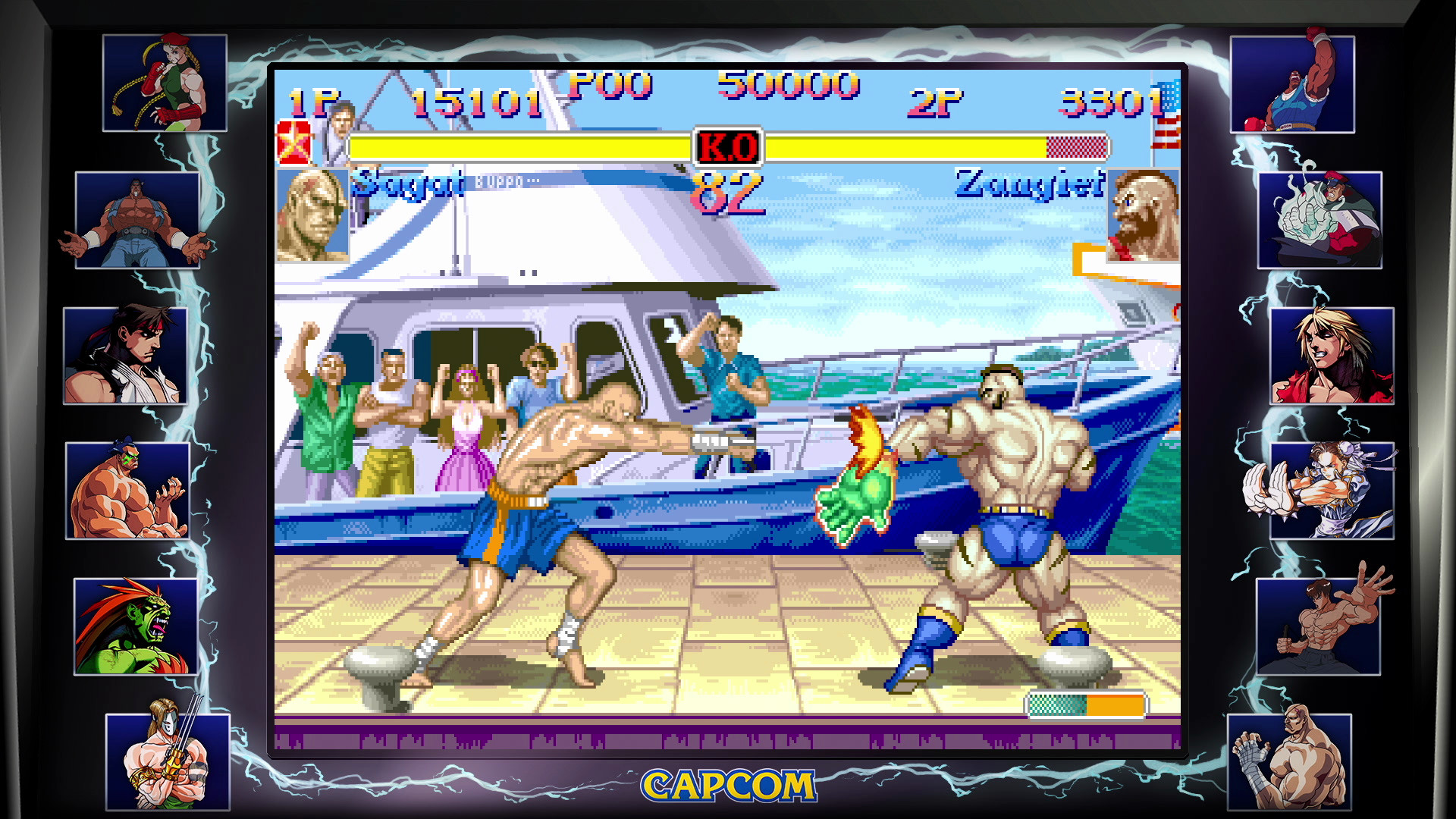
In a 1991 interview, Nishitani described an unexpected sequence involving an uppercut and a Shoryuken. Changes to the input settings had produced behaviour the team had not originally planned.
They liked the result. The effect was therefore discovered while the game was being made, then accepted. It was not simply a finished game escaping the developers’ hands and having an entire combat system invented for it later.
Accidental discovery, deliberate retention
That is the useful way to read the story: an input change made something unexpected possible, and the team decided it was worth leaving in. The interview supports those steps. It does not prove that every combo, input window, or later fighting-game system arrived accidentally.
Nor does it make a particular sequence work in every Street Fighter II revision. If you want to reproduce one, the character, game revision, distance, and timing still matter. A history anecdote is not a verified move list.
For another case where players and developers disagreed about movement, see Carmack’s 1999 strafe-jumping argument.
Join the conversation
Have a question, correction or a different take? Share it below. Comments appear immediately after submission.
Reader comments
Loading comments…