Alan Wake / GAME HISTORY
Did a Physics Bug Inspire Alan Wake’s Poltergeists?
A jittering object supplied the idea. Remedy still had to turn that behaviour into an enemy the player could fight.
Short answer
Yes. GamesRadar’s development retrospective, drawing on Remedy writer Mikko Rautalahti’s account, describes a jittery physics object inspiring Alan Wake’s poltergeist enemies. That is an origin story for the idea, not evidence that every erratic object in the released game is a deliberate feature. [1]
Scope: Development of the original Alan Wake (Xbox 360, 2010). The contextual official screenshot is from the later PC edition; it does not document the original prototype glitch.
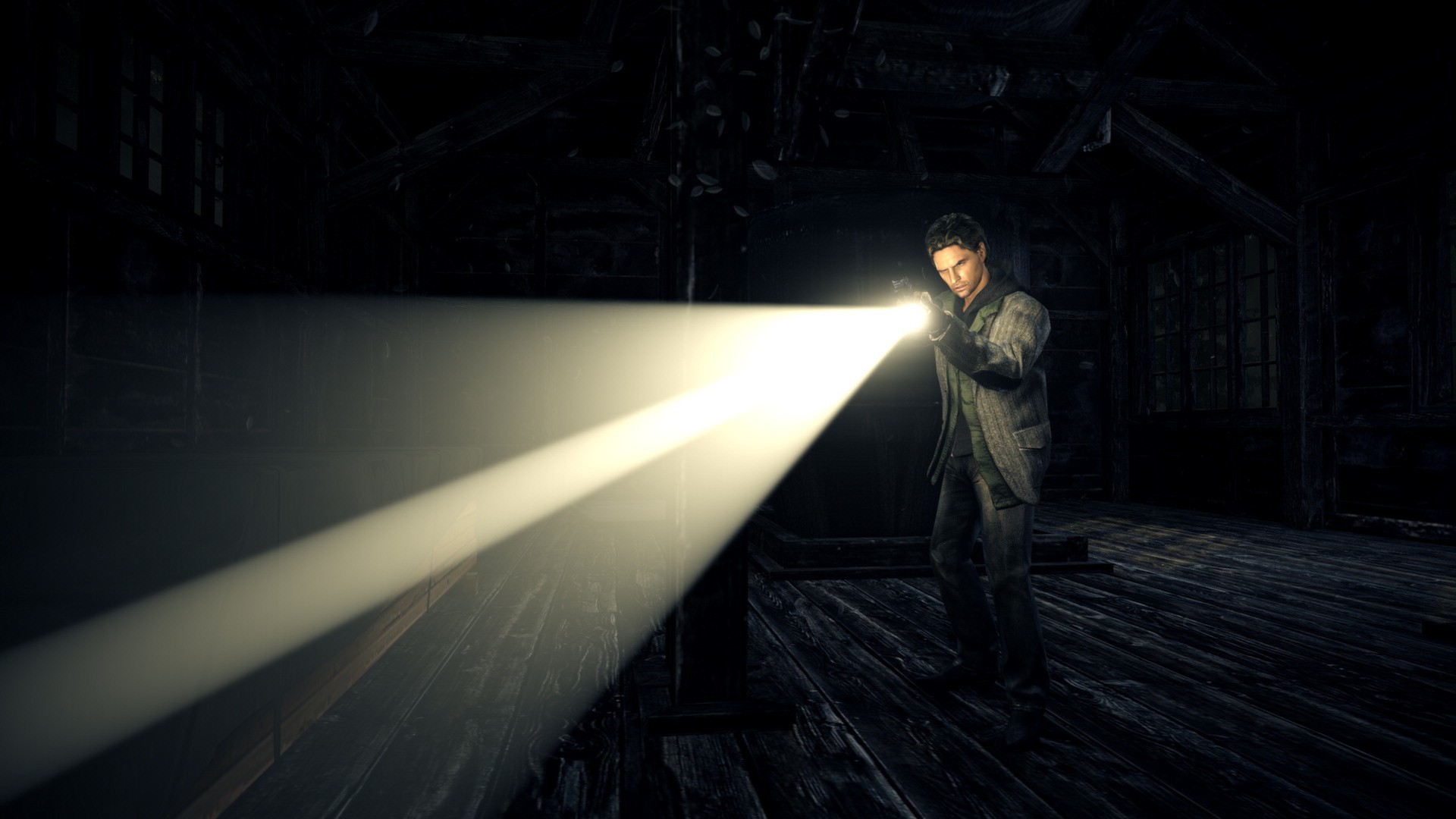
The movement looked like something the darkness could do
The retrospective describes one unstable object giving the team the idea of possessed objects. Something that would ordinarily be corrected during development looked useful in a game about a hostile presence acting through the environment. The account does not identify an exact first prop or a source-code commit. [1]
In the finished game, objects rise and move against Alan instead of remaining harmless scenery. Light gives the player a response to that threat. The visual idea from the glitch becomes part of an encounter, rather than a random interruption the player can do nothing about.
Inspiration and implementation are different claims
“They kept the bug” is a neat way to retell the story, but it skips the design work between noticing a movement and building an enemy. A useful enemy needs a readable threat, a way to respond and a place in the game. A physics failure by itself does not provide all three.
It also does not make every later collision problem intentional. If an ordinary object blocks progress or behaves strangely, this anecdote cannot diagnose it. The supported historical claim is that a development glitch suggested the poltergeist idea.
That is why this example works better than a vague list of “bugs that became features”: it connects a specific observed behaviour—an object jittering—to a specific kind of enemy, while leaving the unrecounted implementation details alone.
Join the conversation
Have a question, correction or a different take? Share it below. Comments appear immediately after submission.
Reader comments
Loading comments…