Strider (NES) / GAME HISTORY
Why Do Jumps Cut Short in Strider on NES?
A wall collision can clear the jump counter and sideways movement. The published investigation tracks the state the sprite alone cannot show.
Short answer
The NES Strider investigation published by Displaced Gamers identifies wall-collision logic that clears the jump frame count and horizontal velocity. That helps explain a jump suddenly stopping beside a wall. Its scripts track several collision points and jump states, rather than treating the visible sprite as one simple box. [1]
Scope: The 1989 North American NES game and Displaced Gamers’ published analysis. The arcade and Mega Drive versions are different games; this is not a claim about them.

The sprite keeps you guessing
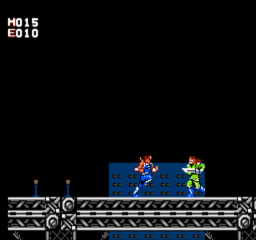
Press jump near a wall and the expected arc can end abruptly. From the screen alone, it can look as if the button stopped registering. The investigation follows the values behind that movement: a jump frame counter, horizontal and vertical velocity, and separate environmental collision checks. [1]
The author’s script explicitly records a wall-collision path that clears the jump frames and lateral movement. It also marks a front-toe collision as a potential jump stop. That gives the awkward movement a more useful explanation than “the controls are bad”: a collision can change the state that is sustaining the jump. [2]
The triangle jump is part of a bigger problem
Displaced Gamers’ article places the triangle jump alongside wall judder, repeated ceiling contact and midair stops. Those symptoms should not all be compressed into one alleged input mistake. The accompanying tool draws the different collision targets and logs movement changes so the sequence can be inspected.
One note in that script describes a low, off-body collision point only as a possible cause. That qualification matters. It is not a licence to present every probe location as a finished explanation for every missed jump.
The useful historical detail is that the investigation exposes state changes a player cannot see. A character appearing close enough to a wall is only the visible part; the game is also consulting collision results and counters that decide whether movement continues.
Join the conversation
Have a question, correction or a different take? Share it below. Comments appear immediately after submission.
Reader comments
Loading comments…