Pokémon Red and Blue / GAME HISTORY
Why Can Confusion Damage the Opponent’s Substitute in Pokémon Red and Blue?
A self-hit can be charged to a Substitute on the other side of the battle.
Short answer
Bulbapedia documents a wrong-target result when a Pokémon behind Substitute hurts itself in confusion: damage goes to the opponent’s Substitute instead. If that opponent has no Substitute, no Pokémon receives the damage in the described case.
Scope: Original Game Boy Red and Blue; community-documented behavior.
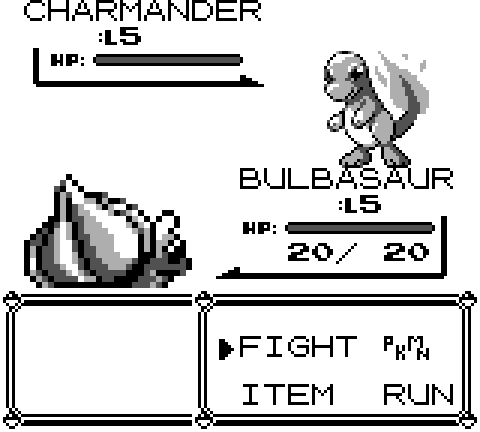
Check both sides of the field
The Pokémon suffering the self-hit must have its own Substitute active. The result then depends on whether its opponent also has one. With two Substitutes, the opponent’s doll takes the hit. Without an opposing Substitute, the documented damage goes nowhere.
- Establish a Substitute on the Pokémon that will suffer the self-hit.
- Check whether the opponent has a Substitute too.
- When confusion produces a self-hit, observe the opposing Substitute rather than assuming the user’s HP must fall.
The same account includes missed kicks
The community record lists Jump Kick and Hi Jump Kick’s self-damage alongside confusion. That is a specific shared result, not permission to describe Substitute as protection against every source of damage or every status condition.
The version limit matters
This explanation concerns the original Generation I battle behavior. The source leaves Stadium checks incomplete. It therefore supports neither a guaranteed Stadium reproduction nor a precise official repair date. No pointer or memory-address diagnosis is needed to state which target loses HP.
Join the conversation
Have a question, correction or a different take? Share it below. Comments appear immediately after submission.
Reader comments
Loading comments…