Sonic the Hedgehog / GAME HISTORY
Why Can Sonic 1 Crash at the Labyrinth Zone Signpost?
The graphics loader can announce that work has started before the data needed to resume it is ready.
Short answer
The Labyrinth Zone crash is linked to a race in Sonic 1’s Pattern Load Cue graphics loader. A frame interrupt can see the load marked active before its saved decompression state is ready. Sonic Retro’s disassembly includes a fix that moves the active counter write until after that state is stored. [1]
Scope: Original 1991 Mega Drive/Genesis Sonic the Hedgehog. This graphics-loading bug is distinct from the spike-damage behaviour and from later engines.
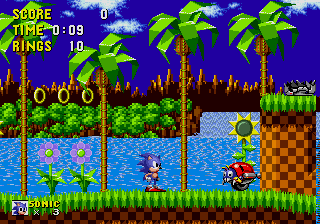

What does the Labyrinth Zone crash look like?
Bug documentation describes rolling past the finish in Labyrinth Zone Act 1 or 2 and pressing down. The view can drop, and the game may show an illegal-instruction error instead of finishing the act normally. Timing matters: reaching the signpost alone does not guarantee a crash. This is a roll in the original game, not the Spin Dash added by later releases. [3]
One routine interrupts another halfway through
Pattern Load Cues let the game prepare compressed graphics over separate pieces of work. The main logic starts a request; work during VBlank can continue it. VBlank is the interval between displayed frames, not another player-controlled move.
In the original order shown by the disassembly, RunPLC stores the remaining-pattern counter before it finishes building the decoding table and saving the output routine and other state. An interrupt arriving in that gap can treat an unfinished request as ready to continue. [1]
The important detail is the order, not that graphics are inherently too large. A nonzero counter tells another routine there is work to resume. That signal is being made visible before the rest of the information is ready.
The fix moves the signal
Under its FixBugs option, the disassembly moves the counter write below the saved decompression values. The accompanying comment explicitly identifies it as a Pattern Load Cue race-condition fix. This is a community bugfix option, not a claim that the original cartridge secretly updates itself.
Is this the same as a missing signpost or an Origins crash?
No. A missing goal object and a crash in a later port need their own diagnosis. The explanation here concerns the original graphics-loader ordering shown in the disassembly. A report about Tails in Sonic Origins is not evidence that the same code path failed on a 1991 cartridge.
For the other common original-game surprise, see why spikes can hurt Sonic while he is still flashing. That is damage behaviour, rather than this graphics-loading race.
Join the conversation
Have a question, correction or a different take? Share it below. Comments appear immediately after submission.
Reader comments
Loading comments…