Speedy Gonzales: Los Gatos Bandidos / GAME HISTORY
The Speedy Gonzales Switch That Exposed Emulator Timing
A mandatory button in Speedy Gonzales: Los Gatos Bandidos exposed a timing problem in old SNES emulators.
Short answer
A mandatory button in Speedy Gonzales: Los Gatos Bandidos exposed a timing problem in old SNES emulators. endrift’s 2017 account credits byuu’s investigation with explaining why accurate hardware timing lets the game continue instead of remaining stuck.
Scope: The stage 6-1 freeze described in endrift’s July 31, 2017 emulation research. No specific current emulator build was tested by Patchlo.
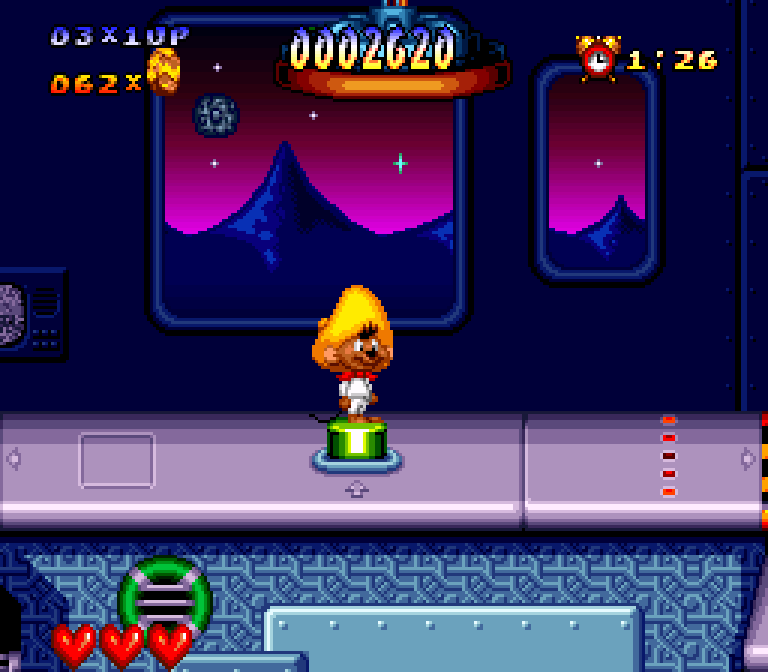
A switch near the end of a long run
The problem appears in Galactical Galaxies, stage 6-1. Pressing the button can leave the music playing while the player can no longer do anything. Because the game has no save system, reaching this point on an affected emulator can mean losing the run’s accumulated progress.
In the historical account, this affected every SNES emulator until 2010. That is a dated description of emulator development, not a claim that every emulator available now is broken.
What the player sees
The visible trigger is simple; the difficult part was explaining why the same game could proceed on console hardware.
- Reach the mandatory button in stage 6-1.
- Step on the button to open the route forward.
- On affected older emulation, progress stops even though the music continues.
The later explanation
endrift describes a loop reading an unmapped address. With an oversimplified timing model, that read keeps producing a value that never allows the loop to finish. Byuu’s research showed that a precisely timed hardware transfer could change what the read sees, allowing the game to continue.
This was an emulator-accuracy correction rather than an official patch to the SNES game. Moving away from an old affected core addresses that distinction, but a particular device and emulator version still need their own compatibility check.
Join the conversation
Have a question, correction or a different take? Share it below. Comments appear immediately after submission.
Reader comments
Loading comments…